Two years before joining Chelsea, Romelu Lukaku stood inside the sunlit basin of an empty Stamford Bridge on a school trip with the Sint-Guido-Instituut, turned to his friend with deliriously wide eyes and muttered: “I love Chelsea. If one day in my life I will cry, it will be the day I play here. This is not dreaming. I will do it.”
And so a dream fulfilled is ultimately diminished by divorce. After eight years of prolific goalscoring and equal scorn, Romelu Lukaku is set to draw the curtains on his career in England. His impending departure from Manchester United has been met with little fanfare, no spoken through lawyers tiff or desperate pleas for another chance, just the resignation that hopes of a happy ending are annulled.
Ed Woodward will be relieved to recoup the £75m outlaid on the Belgian in 2017 if Inter Milan are able to delve into newly lined pockets. Ole Gunnar Solskjaer has stayed suspiciously reticent and Lukaku himself has made no strange attempt to shield his wandering eyes from a fresh start. This is an agreeable settlement on all sides. Yet, as the Premier League prepares to lose one of its greatest strikers of this recent era, the end can’t help but feel anticlimactic.

We have followed Lukaku on a journey of remarkable endurance since he failed to forge a breakthrough at Chelsea. There was the grit to cut his teeth on loan at West Brom, the streaking brilliance over four seasons at Everton and the resilience to battle against the rocky tides of two separate regimes at United. We’ve revelled in the moments of brilliance and roared at the downright barmy as Lukaku climbed the ladder to become the 19th highest goalscorer in Premier League history and subject to nine figures in transfer fees. And yet as he departs at 26, still searching for his peak, he is a player who remains largely misunderstood.
Yes, Lukaku can be clumsy. His footwork can be ungainly and he can look lost with the ball at his feet. Sometimes, when he swivels off-kilter, it’s a bit like a supersized dodgem smashing straight through his marker. His physique paints him as a typical target man, a devout No 9, yet his style is unorthodox, deceivingly fast and direct; a 6’4” frontman whose greatest weapon isn’t his forehead or holding up the ball, but running at a defence. It’s telling that arguably the Belgian’s greatest performance in a United shirt came on the right-wing against Arsenal, exploding on the counter-attack.
Because Lukaku doesn’t play to the one-dimensional mould his stature would ordinarily dictate, it has been hard to measure people’s expectations. A player who can offer a little bit of everything, but from whom fans demand the best of all worlds and, despite his exceptional goalscoring record, can leave his talents under-appreciated both with fans and the manager who have struggled to harness a power that fires in fits and spurts.
It would be foolish to try and disentangle Lukaku’s success from the way he is treated, just as it would be ignorant to suggest he hasn’t become an easy target during his time at United. His price tag immediately drew crosshairs and unreasonable expectations – even if he fell some way more than a hectare short. Scrutiny over his physique has become a tired and perpetual narrative. Nobody knows what influence the, at times, over-egged criticism has had on Lukaku, but he’s always been acutely aware of it.
The vast majority of critics are entirely objective and justified in their opinion. But, equally, there is no way of turning a blind eye to the sinister undertone Lukaku has been subjected to by a small few. Whether it was Eamon Dunphy labelling him the “Belgian Emile Heskey” before playing a minute for United or Kick It Out having to ask the supporters at Old Trafford to stop a chant insinuating his undercarriage was the size of a small bicycle tyre, it’s something Lukaku has been acutely aware of and will doubtlessly have taken its toll.
When he looks back on his time in England, he will remember the weight of those slights along with the success. “I’m a religious person and God always tells me to forgive,” he said in a recent interview. “But I don’t forget.”
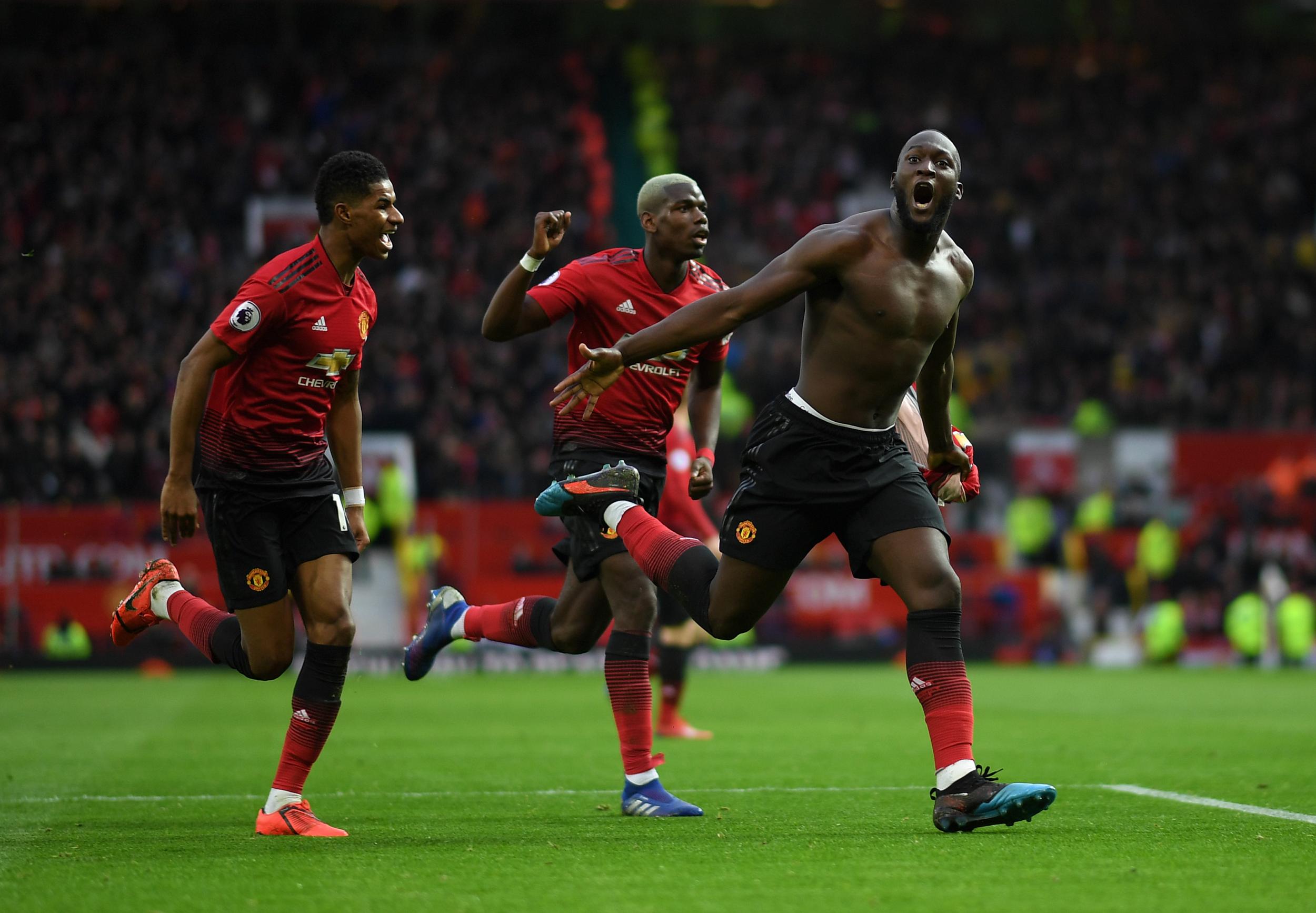
And so a dream fulfilled is ultimately diminished by divorce. After eight years of prolific goalscoring and equal scorn, Romelu Lukaku is set to draw the curtains on his career in England. His impending departure from Manchester United has been met with little fanfare, no spoken through lawyers tiff or desperate pleas for another chance, just the resignation that hopes of a happy ending are annulled.
We have followed Lukaku on a journey of remarkable endurance since he failed to forge a breakthrough at Chelsea. There was the grit to cut his teeth on loan at West Brom, the streaking brilliance over four seasons at Everton and the resilience to battle against the rocky tides of two separate regimes at United. We’ve revelled in the moments of brilliance and roared at the downright barmy as Lukaku climbed the ladder to become the 19th highest goalscorer in Premier League history and subject to nine figures in transfer fees. And yet as he departs at 26, still searching for his peak, he is a player who remains largely misunderstood.
Because Lukaku doesn’t play to the one-dimensional mould his stature would ordinarily dictate, it has been hard to measure people’s expectations. A player who can offer a little bit of everything, but from whom fans demand the best of all worlds and, despite his exceptional goalscoring record, can leave his talents under-appreciated both with fans and the manager who have struggled to harness a power that fires in fits and spurts.
It would be foolish to try and disentangle Lukaku’s success from the way he is treated, just as it would be ignorant to suggest he hasn’t become an easy target during his time at United. His price tag immediately drew crosshairs and unreasonable expectations – even if he fell some way more than a hectare short. Scrutiny over his physique has become a tired and perpetual narrative. Nobody knows what influence the, at times, over-egged criticism has had on Lukaku, but he’s always been acutely aware of it.
The vast majority of critics are entirely objective and justified in their opinion. But, equally, there is no way of turning a blind eye to the sinister undertone Lukaku has been subjected to by a small few. Whether it was Eamon Dunphy labelling him the “Belgian Emile Heskey” before playing a minute for United or Kick It Out having to ask the supporters at Old Trafford to stop a chant insinuating his undercarriage was the size of a small bicycle tyre, it’s something Lukaku has been acutely aware of and will doubtlessly have taken its toll.
When he looks back on his time in England, he will remember the weight of those slights along with the success. “I’m a religious person and God always tells me to forgive,” he said in a recent interview. “But I don’t forget.”
Comments
Post a Comment